

Cholecystitis surgery – you need to know
Many people have heard of such a pathology as cholecystitis at least once in their lives. But what can it be caused by, what are its symptoms, how to treat it, and which doctor to go to – not everyone can answer all these questions with confidence anymore. This article provides all the information you need to act on this diagnosis with confidence.
What is cholecystitis?
Cholecystitis is an inflammatory disease of the gallbladder, which often complicates the course of cholelithiasis. Cholecystitis is not considered an independent disease in modern medical circles, as it almost always occurs on the background of cholelithiasis or pathologies that interfere with the passage of bile down the bile ducts.
Types of cholecystitis
Cholecystitis, like any other inflammatory pathology, has two key variations – it can be acute and chronic. Acute cholecystitis is often accompanied by a rapid and vivid onset of symptoms and develops over a short period of time. In turn, it can be:
- Catarrhal;
- Phlegmonous;
- Gangrenous.
Chronic cholecystitis bothers the patient only occasionally. Its symptoms are more subtle. Often patients do not seek help for many years because the symptoms are mild. Chronic cholecystitis can be divided into the following varieties:
- Calculous (with the presence of stones in the gallbladder) ;
- Stoneless.
Why does cholecystitis occur?
Among the main factors that cause the disease are the presence of bile stasis and the presence of infection in the bile ducts. Secondary factors include an imbalance in the blood supply and innervation of the gallbladder and bile ducts.
Often the bacteria enter these ducts by the retrograde route. In other words, they ascend the bile ducts upwards from the colon, entering through the Fater nipple. It is through this that bile from the liver and gallbladder normally enters the intestine, as well as the pancreatic juice needed for digestion.
Normally, the bile that flows through the ducts flushes down to the intestine all the bacteria that have accumulated in the lumen. Bile stagnation, the lack of its constant flow down the ducts, which is complicated by the presence of stones, causes the infection to rise until it reaches the gallbladder itself. Inflammation occurs as the bacteria multiply in the bladder.
Symptoms of cholecystitis
The symptoms of cholecystitis vary slightly depending on the exact form the patient has. It should be noted that in acute cholecystitis the symptoms are usually much more acute than in chronic cholecystitis, and they increase in intensity in the following order: catarrhal – phlegmonous – gangrenous. The main symptoms include the following:
- Nausea;
- Repeated vomiting;
- Rising body temperature;
- Pain, more in the right subcostal area, often with irradiation (recoil) to the right scapula, kidney, right side of the neck and shoulder;
- Bloating;
- Lag of the right half of the abdomen in breathing from the left;
- Tachycardia.
Note that in some cases, when cholecystitis is accompanied by stones in the bile ducts and their blockage, the patient develops jaundice. This is caused by the release of bile pigments into the blood. This jaundice is called obstructive jaundice.
Diagnosis of cholecystitis
Proper diagnosis of cholecystitis is based on an initial examination of the patient and collection of his anamnesis (life and medical history). The doctor will talk to the patient, find out what symptoms bother him/her and carry out a number of manipulations which include palpation and percussion.
In some cases, the doctor may also need additional tests, including ultrasound and retrograde pancreatocholangiography. Some laboratory tests such as total bilirubin and thymol (AST, ALT) may also be useful.
Treatment of cholecystitis
The mainstay of treatment consists of taking antibiotics and encouraging the excretion of bile by using choleretic drugs. Diet is also an important part of the treatment of stone-free cholelithiasis. Patients are usually given a 5-step diet with up to 6 meals a day. The most common surgical therapies used include:
- Traditional cholecystectomy (performed by access through the abdominal cavity and subsequent removal of the gallbladder through the incision);
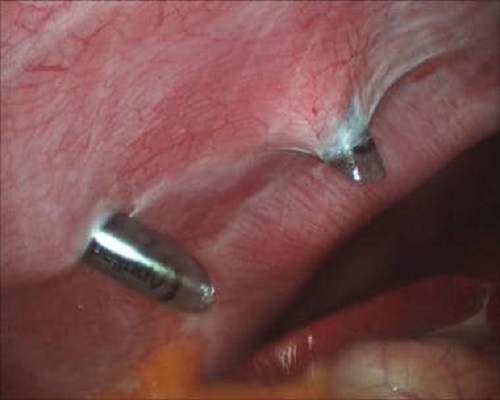
- Laparoscopic cholecystectomy (performed by inserting special thin devices into the abdominal cavity with gas injection for better visibility. The operation is minimally invasive).
- Laparoscopic cholecystectomy (performed by inserting special thin devices into the abdominal cavity with gas injection for better visibility. The operation is minimally invasive).
It is worth noting that surgical intervention in cholecystitis is usually used in cases of no effect from medical therapy. One of the indications for surgery is also cholelithiasis which cannot be treated by other methods. A person usually has to undergo a large number of tests before the operation.
Possible complications after treatment
The probability of various complications after drug treatment is not very high and often depends on many different factors. These include drug tolerance, liver and kidney function and the metabolic rate of the patient. When it comes to possible complications of surgical treatment, the following are distinguished
- Peritonitis (peritoneal inflammation, a very dangerous complication that can lead to sepsis. The risk of occurrence is low);
- Bleeding (can occur during and after any operation. The risk is low);
- Forgotten instruments, tissues, tampons, etc. (Low risk of occurrence). (Low risk, but higher than with laparoscopic procedures);
- Creation of adhesions (formation of adhesions between the peritoneum and the organs. Risk is high with laparotomy and low with laparoscopy);
- Pulmonary embolism (low risk in laparoscopic surgery and low risk with proper prophylaxis after traditional cholecystectomy).
Separately, we would like to point out that many complications are non-specific, and can occur after almost any operation.
We would like to draw your attention to the fact that many complications are non-specific and can occur after almost any surgery.
Prognosis
In general, it is worth noting that the prognosis for the life and health of a patient suffering from cholecystitis is favourable, whatever the method of treatment may be. The prognosis can be improved by adhering to the diet, and periodic check-ups with a surgeon or your general practitioner.
